7 Dec 2012
Make Your Own Microscope
What you'll need:
A piece of fuse wire
Some water
Objects to look at (newspaper or a magazine with fine print works well
Instructions:
Make a loop at the end of the fuse wire about 2mm wide.
Dip it into some water to get a drop formed in the loop.
Hold it close to your eye and look closely at an object such as a magazine.
You may have to experiment to get the right distance but you should see a magnified image, especially if you have the drop as close to your eye as possible.
What's happening?
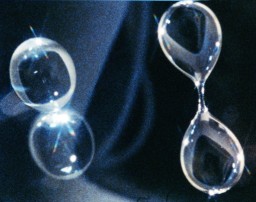
Pioneers of early microscopes originally used tiny glass globes filled with water to magnify objects, this is similar to what you are doing in this experiment. The water droplet forms the shape of a convex lens, which refracts the light and converges it at the point where you see the image clearly. It was later that the method of grinding glass to make lenses was perfected. Modern microscopes have many lenses in them and allow us to see extremely small objects.
6 Dec 2012
Fossil Cast Project
What you'll need:
Plasticine
2 paper cups
An object that you would like to use as the fossilized impression
Plaster of paris
Water
Instructions:
Flatten a ball of plasticine until it is about 2 cm thick while making sure the top is smooth.
Put the plasticine inside a paper cup with the smooth side facing up. Carefully press the object you want to fossilize into the plasticine until it is partially buried.
Carefully remove the object from the plasticine. An impression of the object should be left behind.
Pour half a cup of plaster of paris into the other paper cup. Add a quarter cup of water to the plaster and stir until the mixture is smooth. Leave it for around two minutes.
When the mixture has thickened pour it on top of the plasticine in the other cup. Leave the mixture until the plaster has dried.
When the plaster has fully dried, tear away the sides of the paper cup and take out the plasticine and plaster. Keep it in a warm dry place and enjoy your very own fossil.
What's happening?
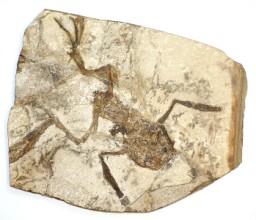
Fossils are extremely useful records of the past. In your case you left behind an impression of an object you own but fossils found by scientists around the world can date back to the time of dinosaurs. These fossils allow paleontologists (the name of scientists who study these types of fossils) to study what life might have been like millions of years ago. Fossils such as the one you made can leave delicate patterns and a surprising amount of detail.
5 Dec 2012
Grow Your Own Salt Crystals
What you'll need:
A jar
Water
About half a cup of salt
A spoon for stirring
String
Scissors
2 toothpicks
Instructions:
Fill the jar with water.
Add about half a cup of salt to the water.
Mix the solution together with a spoon.
Cut a piece of string with scissors and tie each end to a toothpick.
Place the string over the top of the jar so that the string dangles into the middle of the solution and the toothpicks hang over the edge.
Don’t forget to clean up when you’ve finished.
What next?
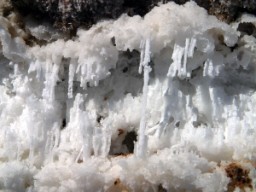
Leave the experiment and wait for salt crystals to form along the string. They are an excellent example of cubic crystals and you can do further research with them by examining them under a microscope.
When you look at various crystals under a microscope you can examine the differences between them: Are they perfectly formed? What shape are they? What color? Can you see any microorganisms on the crystals?
Crystals can be found grouped together as lots of small crystals or as huge individual crystals. They vary in size from those at the microscopic level all they way up to crystals that are meters in length!
Try collecting a range of crystals for your project, label the different types and make a rock collection box to keep them in.
4 Dec 2012
Movement (Answers)
Section A
(a) faster
(b) slower
Section B
(a) 36
(b) 275
(c) 10 1/3
(d) 65.33
Section C
1) C
2) D
3) C
4) B
Section D
(a) Car P travelled the longest distance 20 minutes followed by car R and car Q.
(b) Car P travelled at the highest speed within 20 minutes among the three cars.
(c) i. The speed of a car
ii. The distance it travels within a fixed time
(d) The higher the speed of a car, the further the distance it travels within a fixed amount of time
(a) faster
(b) slower
Section B
(a) 36
(b) 275
(c) 10 1/3
(d) 65.33
Section C
1) C
2) D
3) C
4) B
Section D
(a) Car P travelled the longest distance 20 minutes followed by car R and car Q.
(b) Car P travelled at the highest speed within 20 minutes among the three cars.
(c) i. The speed of a car
ii. The distance it travels within a fixed time
(d) The higher the speed of a car, the further the distance it travels within a fixed amount of time
Movement (Worksheet)
Section A : Write " faster" or "slower" for each situation below.
(a) Kar Hee and Maniam were given 10 minutes to walk a certain distance. The diagram shows the distance they walked in 10 minutes.
Kar Hee walked than Maniam
(b) Car E and car F left the same place st 9.00 a.m. They used the same route to travel to town.
Car F travelled than car E.
Section B : Calculate the value in each situation.
a) A car takes 30 minutes to travel 18km. What is its speed?
Speed = km/h
b) A lorry travels 2.75 hours at a speed of 100 km/h. What is the distance the lorry travels?
Distance = km
c) Mary cycles at a speed of 1.5 m/s to her friend's house situated 930 meters away from her house.
How much times does Mary take to reach her friend's house?
Time = minutes
d) A motorcycle travels 49 km in 45 minutes. What is its speed?
Speed = km/h
Section C : Multiple Choices
1) Mr. Bonny drives a distance of 120km in an hour. Predict the total distance he travels if he drives for 45 minutes more at the same speed.
A. 90 km
B. 100 km
C. 210 km
D. 300 km
2) A van takes four and a half hours to reach its destination located 360 km away. What is the van's speed?
A. 100 km/h
B. 95 km/h
C. 85 km/h
D. 80 km/h
3) The diagram below shows the movement of a car
What can you conclude from the diagram above?
A. The speed of the car is increasing
B. The car is facing less friction by the minute
C. The car will eventually stop
D. The speed of the car is constant
4) Car A travels at 90 km/h and car B travels at 75 km/h over a distance of 90 km. What is the difference in time between the two cars to travel 90 km?
A. 5 minutes
B. 12 minutes
C. 1 hour
D. 1 hour 12 minutes
Section D : Structure Question
1) The bar chat below shows the distance travelled by three different cars within 20 minutes.
(a) Observe and compare the distance travelled by car P, Q and R.
( 1 mark)
(b) What can you infer about the distance travelled by car P if compared to the distance travelled by
cars Q and R?
( 1 mark)
(c) " The speed of a car determines the distance it travels within a certain amount of time"
Based on the statement above, state
i. what is changed :
ii. what is measured :
( 2 marks)
(d) State the relationship between the two factors you mentioned in question 4(c).
( 1 mark)
(a) Kar Hee and Maniam were given 10 minutes to walk a certain distance. The diagram shows the distance they walked in 10 minutes.
![]() |
| Diagram 1 |
Kar Hee walked than Maniam
(b) Car E and car F left the same place st 9.00 a.m. They used the same route to travel to town.
![]() |
| Diagram 2 |
Car F travelled than car E.
Section B : Calculate the value in each situation.
a) A car takes 30 minutes to travel 18km. What is its speed?
Speed = km/h
b) A lorry travels 2.75 hours at a speed of 100 km/h. What is the distance the lorry travels?
Distance = km
c) Mary cycles at a speed of 1.5 m/s to her friend's house situated 930 meters away from her house.
How much times does Mary take to reach her friend's house?
Time = minutes
d) A motorcycle travels 49 km in 45 minutes. What is its speed?
Speed = km/h
Section C : Multiple Choices
1) Mr. Bonny drives a distance of 120km in an hour. Predict the total distance he travels if he drives for 45 minutes more at the same speed.
A. 90 km
B. 100 km
C. 210 km
D. 300 km
2) A van takes four and a half hours to reach its destination located 360 km away. What is the van's speed?
A. 100 km/h
B. 95 km/h
C. 85 km/h
D. 80 km/h
3) The diagram below shows the movement of a car
![]() |
| Diagram 3 |
What can you conclude from the diagram above?
A. The speed of the car is increasing
B. The car is facing less friction by the minute
C. The car will eventually stop
D. The speed of the car is constant
4) Car A travels at 90 km/h and car B travels at 75 km/h over a distance of 90 km. What is the difference in time between the two cars to travel 90 km?
A. 5 minutes
B. 12 minutes
C. 1 hour
D. 1 hour 12 minutes
Section D : Structure Question
1) The bar chat below shows the distance travelled by three different cars within 20 minutes.
(a) Observe and compare the distance travelled by car P, Q and R.
( 1 mark)
(b) What can you infer about the distance travelled by car P if compared to the distance travelled by
cars Q and R?
( 1 mark)
(c) " The speed of a car determines the distance it travels within a certain amount of time"
Based on the statement above, state
i. what is changed :
ii. what is measured :
( 2 marks)
(d) State the relationship between the two factors you mentioned in question 4(c).
( 1 mark)
Subscribe to:
Posts (Atom)